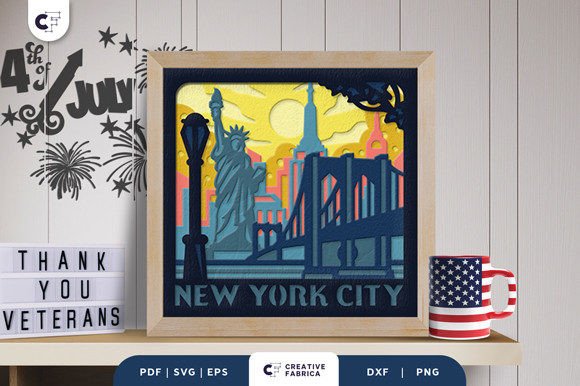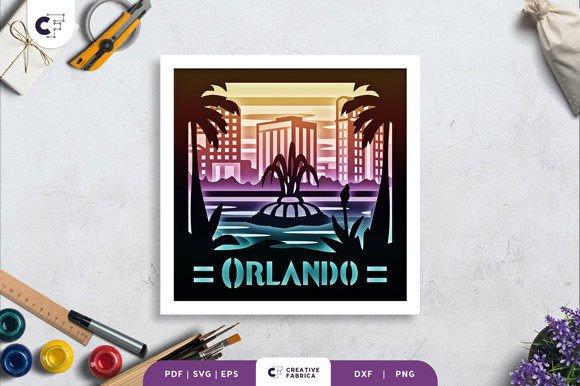
Washington DC 3D Shadow Box Papercut
There is something undeniably captivating about the way light interacts with depth. When you look at a flat image, your brain processes it as two-dimensional information. But when you introduce layers—when shadows fall behind shadows and elements recede into the background—you create an illusion of space that feels tangible. This is exactly what makes the Washington DC 3D Shadow Box Papercut such a compelling project for crafters who want to move beyond simple card making and into the realm of immersive art.
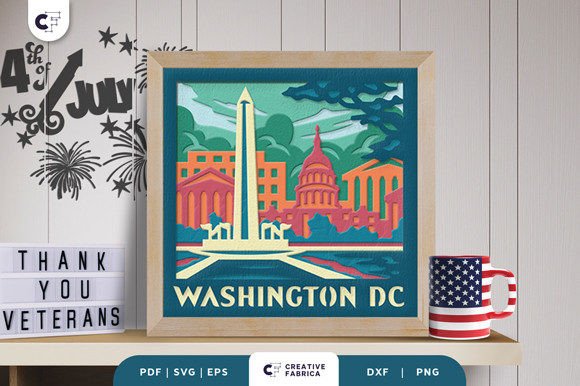
This isn't just a stencil; it is a layered, square paper cutting template designed to transform a standard piece of cardstock into a striking visual representation of the nation’s capital. By utilizing eight distinct layers, the design captures the iconic skyline, from the Capitol Dome to the Washington Monument, creating a sense of perspective that draws the eye inward. For those looking to add a touch of architectural elegance to their home or office, this template offers a sophisticated solution that requires no prior artistic training, only patience and precision.
Why Choose a Layered Papercut Design?
In recent years, the popularity of papercraft has surged, driven largely by the versatility of digital cutting machines like Cricut and Silhouette. However, the appeal goes far beyond the convenience of automated cutting. A layered shadow box allows for a level of customization and emotional resonance that mass-produced decor simply cannot match. Imagine hanging a piece of art in your living room that depicts the city where you met your spouse, or where you graduated college. The Washington DC 3D Shadow Box Papercut becomes more than just a decoration; it becomes a narrative object.
Consider the scenario of someone moving to a new city. Packing up a life is stressful, but curating a new space brings comfort. Installing a framed shadow box featuring landmarks of a favorite travel destination can instantly make a sterile apartment feel like home. It serves as a conversation starter, inviting guests to lean in closer to see the intricate details of the Lincoln Memorial or the White House facade rendered in paper. The tactile nature of the medium invites interaction in a way that digital screens do not.
Technical Specifications and Material Considerations
Before diving into the assembly process, it is crucial to understand the scale and materials involved. The template is sized at 20.32×20.32 cm (approximately 8x8 inches), which is a perfect size for standard frames found in most home goods stores. This compact footprint means it won’t overwhelm a small desk or bookshelf, yet it is large enough to showcase the complexity of the eight-layer design.
The quality of the final product hinges heavily on the paper you choose. The design specifies Encore Cardstock 80 lb cover (216 gsm). Why does this matter? Thinner papers may tear easily during the removal of tiny negative spaces, especially if you are using manual tools rather than a machine. Heavier cardstocks provide the structural integrity needed to hold the shape of delicate arches and spires without warping. If you opt for colored paper, be aware that darker hues might require a stronger backing or additional support if you plan to backlight the piece, as they absorb more light.
You will receive the template in multiple formats: SVG, PDF, EPS, PNG, and DXF. This flexibility is a significant advantage. If you own a cutting machine, the SVG file ensures clean, precise cuts. If you prefer hand-cutting, the PDF provides clear lines to follow with an art knife and scissors. The inclusion of vector files also means you can resize the design while maintaining the aspect ratio, allowing you to fit it into larger frames or smaller display cases depending on your available wall space.
Creative Applications Beyond Framing
While framing is the traditional route, the potential uses for this design extend into several creative territories. One particularly popular variation is transforming the shadow box into a light box. By placing LED strip lights between the layers—or behind the entire stack—the paper transforms into a glowing lantern. The white spaces in the papercut allow light to filter through, creating a soft, ambient glow that highlights the silhouette of the cityscape. This effect is especially dramatic in dimly lit rooms, turning the artwork into a functional nightlight or a centerpiece for evening gatherings.
For educators or history enthusiasts, this project offers a unique educational tool. A physical model of Washington DC, even in stylized papercut form, can spark discussions about urban planning, architectural styles, and historical significance. Teachers might use it in social studies classrooms to help students visualize the layout of the National Mall. Parents might use it to teach children about geography and landmarks in a hands-on, engaging way that textbooks cannot replicate.
In the corporate world, custom papercuts are gaining traction as high-end gifts. Instead of generic mugs or pens, a company might gift a client a framed Washington DC 3D Shadow Box Papercut to commemorate a successful partnership or a relocation. The personalization potential is endless; you could swap out the standard color palette for corporate branding colors, adding a layer of professional relevance to the artistic gesture.
Assembly Challenges and Tips
Assembling an eight-layer design is a meditative process, but it does come with challenges. The primary difficulty lies in alignment. Each layer must be perfectly centered relative to the others to maintain the intended perspective. Misalignment can distort the image, making straight lines appear crooked or causing landmarks to overlap incorrectly. Using double-sided tape or glue dots is recommended over liquid glue, which can warp the paper and take too long to dry.
Another consideration is the handling of small pieces. When working with detailed sections, such as the columns of the Jefferson Memorial, you may find that some cutouts are fragile. Patience is key. If you are using a cutting machine, ensure your blade is sharp and your mat has adequate tackiness to prevent shifting during the cut. If you are hand-cutting, invest in a good pair of fine-tip scissors and a sturdy cutting mat to protect your work surface and ensure clean edges.
It is also worth noting that the images provided for preview purposes are for illustrative purposes only. The actual color of your finished product will depend on the lighting conditions under which you view it and the specific shade of cardstock you select. Natural daylight will render colors differently than incandescent or LED bulbs, so it is wise to test a small sample before committing to a full roll of paper.
Who Is This Project For?
This project appeals to a broad spectrum of individuals. For the seasoned crafter, it offers a complex challenge that tests their precision and patience. For the beginner, it serves as an excellent introduction to multi-layered papercrafting, providing a structured path to success. The availability of digital files lowers the barrier to entry, allowing anyone with access to a printer or a cutting machine to participate.
Interior designers might incorporate these pieces into modern, minimalist spaces where texture and light play pivotal roles. They offer a way to introduce warmth and personality into a room without cluttering it with excessive decor. Similarly, event planners might use scaled-down versions of this design as table centerpieces or welcome signs for weddings and conferences themed around American history or government.
Ultimately, the Washington DC 3D Shadow Box Papercut is more than a craft kit; it is a bridge between technology and tradition. It leverages modern digital tools to recreate the timeless art of paper cutting, resulting in a piece that is both contemporary and classic. Whether used as a heartfelt gift, a decorative accent, or an educational aid, it brings a unique dimension to any space it occupies.